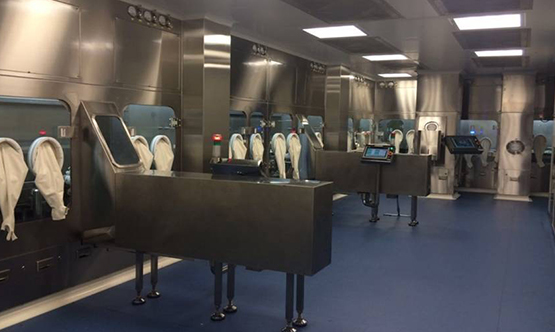
STERILITY TEST ISOLATORS
Labs searching for a high level of security for testing and product sterility can consider sterility test isolator. These devices may create an environment that is EU GMP “Grade A” and are validated for that purpose. With different kinds of bio-decontamination systems, these devices can be used for filter membrane and direct inoculation sterility tests.
STERILITY TEST ISOLATORS OFFER ELEVATED STATE OF PRODUCT AND TESTING PROTECTION
Loading and unloading equipment is developed for sterility test isolators. They have transparent designs, rounded corners, and HEPA or ULPA filters to maintain a hygienic working environment. To safeguard the environment and prevent product contamination, they also have laminar or turbulent airflow. Some models also come with built-in software that makes it easier to manage different settings, records, and modifications.
People are the main source of germs in sterility tests. People bring about a significant amount of contamination in a cleanroom. Our mouths and skin carry bacteria, and media containers and test sample packaging can also be infected. However, these microbes can be reduced or entirely removed with the right testing methods.

STERILITY TEST ISOLATORS HAVE BEEN VALIDATED
To provide sterility tests with controlled conditions, sterility test isolators were developed. The isolator delivers air that has been reproducibly cleaned and HEPA-filtered. Open and closed isolators are the two main categories. While closed isolators only allow materials to exit through a specific entrance, open isolators have no direct connection to the outside environment. In both cases, the integrity of the isolator is ensured by the employment of decontaminated interfaces and rapid-transfer ports. Glass, stainless steel, or flexible polymers can be used to build both open and closed isolators.
Tubes and vials are among the items that the sterility test isolator can hold. Additionally, the items must be able to be loaded onto the proper base trays using the isolator. The validation work determines how many loaded objects there are. Surface-to-surface contact must be avoided in the chambers in order to properly decontaminate the items inside the isolator.
STERILITY TEST ISOLATORS SHOULD BE MONITORED
Although sterility test isolators are frequently used to confirm the sterility of a product, it is important to pay regular attention to them to make sure they are working properly. This is crucial since poor outcomes do not always indicate a product failure. As a result, it is crucial to carry out a number of tests to make sure a product is sterile.
To achieve the lowest possible microbiological levels in the air, sterilization test isolators must be thoroughly cleaned and inspected. Additionally, they must be able to tolerate continuous air pressure overpressure. A sterility test isolate’s surroundings should be free of contamination, such as dust and other airborne particles.
STERILITY TEST ISOLATORS SHOULD BE TESTED
The process of determining whether a product or mixture is sterile is known as sterility testing. One of the several techniques offered is used for this process. Membrane filtration is one of these techniques. Of this technique, microorganisms are gathered using a filter with 0.45 millimeter pore size. After being captured, these organisms are next examined.
An aseptic facility that is independent from the production facility should be present in a clinical laboratory. The aseptic facility needs to be big enough and furnished with the right tools and resources. If isolates are going to be employed in the creation of biopharmaceutical products, sterility testing should be done on them.
STERILITY TEST ISOLATORS SHOULD BE PLACED IN A GRADE A ENVIRONMENT
It is vital to adhere to the correct norms and regulations for the isolator when getting ready for a sterility test. The isolator should be kept at a positive pressure in comparison to its surroundings. A minimum 10 Pa difference between the two is required. But it’s crucial to keep in mind that occasionally a negative pressure critical zone is necessary. If so, it needs to be contained in a positive pressure envelope.
The isolator’s integrity is essential for sterility testing. To prevent residual gas, the isolator needs to have sufficient ventilation and degassing techniques. Additionally, the isolator needs to have appropriate microbiological oversight. So that the isolator may be used with trust, the monitoring data should be documented.
STERILITY TEST ISOLATORS SHOULD BE DECONTAMINATED
Make sure that a sterility test isolator has been completely decontaminated before using it to produce a biological or medical product. The act of decontaminating an isolator involves treating it with a substance that prevents bacteria growth. Containers for the product as well as accessories including filter sets, tubing, media, and dilution fluids may need to be decontaminated. Before using the container, the operator must make sure it has not been harmed by the decontamination agent.
An isolator’s decontamination procedure needs to be validated and applied to all surfaces. Surfaces that come into direct touch with the product should be sterilized using sporicidal or conventional methods. All surfaces that might be exposed to the critical zone, like the air inlet and recirculation ducts, should be included in the procedure. sporicidal agents should be used to wipe or spray other surfaces to remove contamination. Direct product contact must be prevented at all costs.