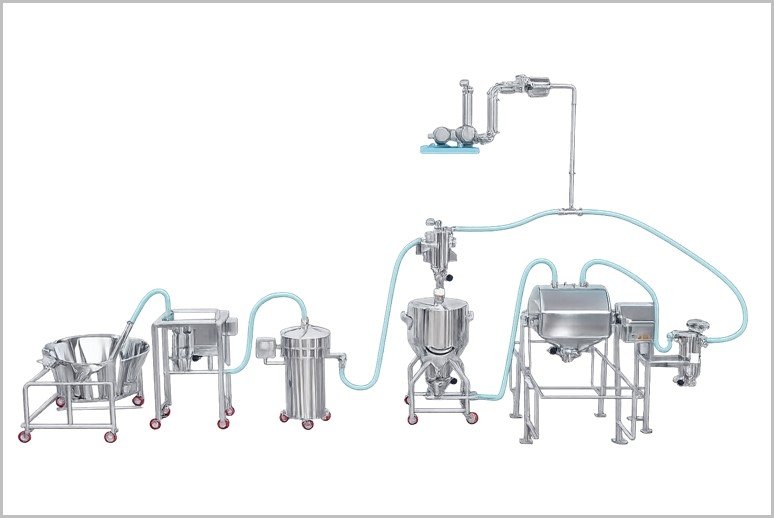
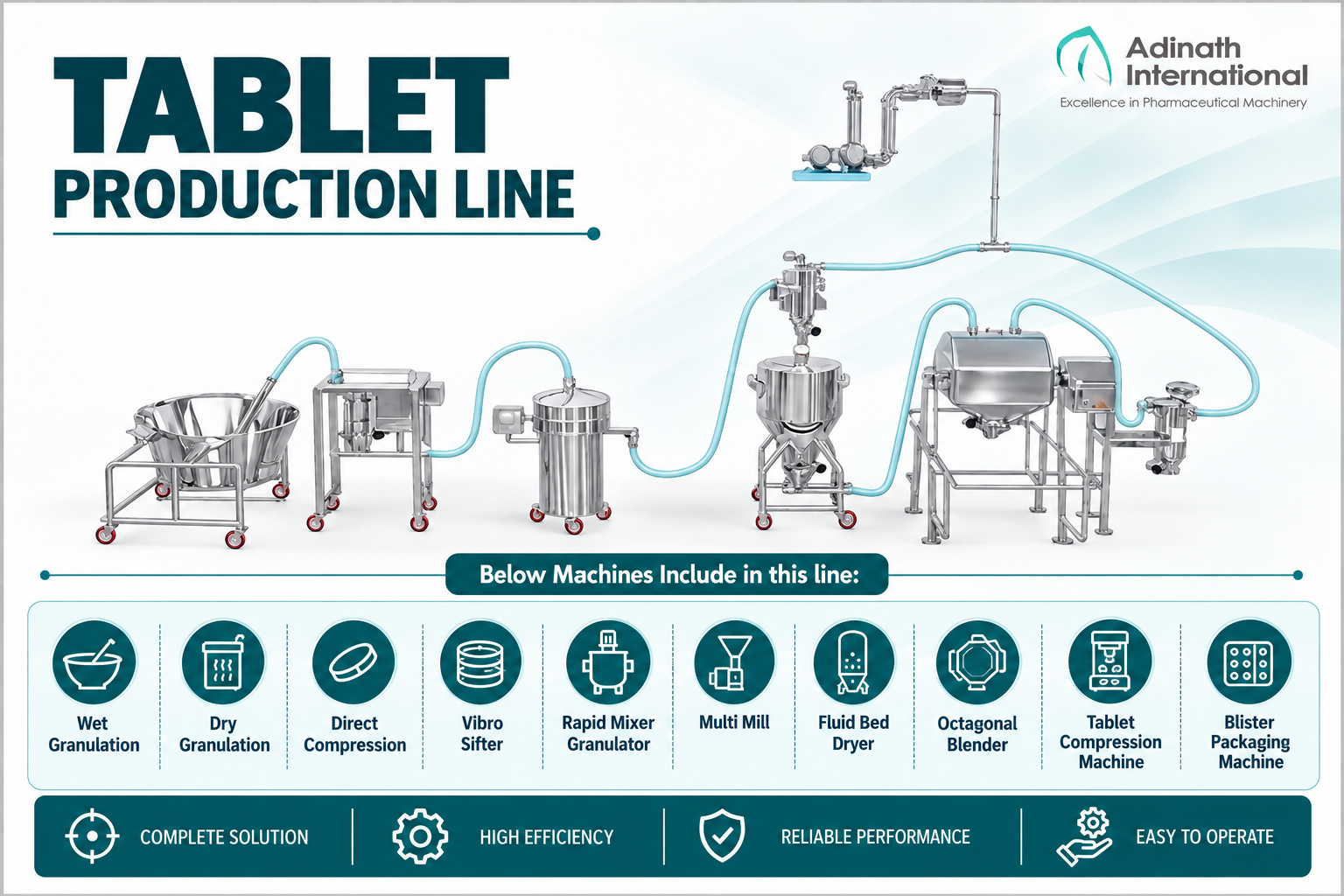
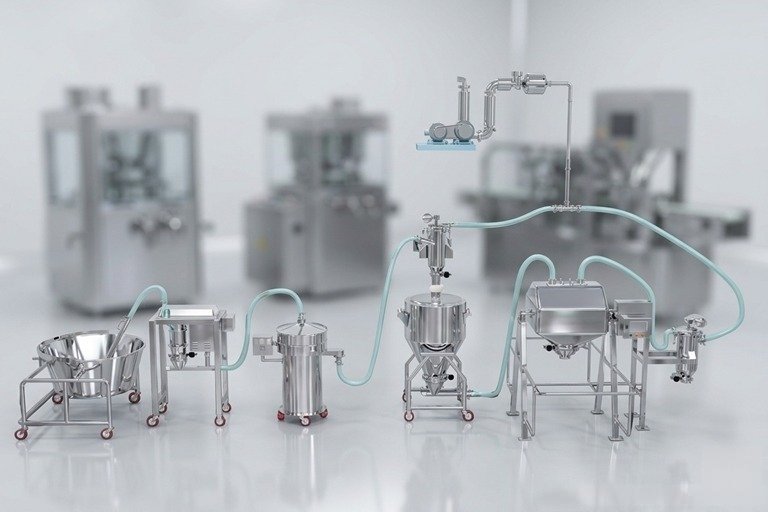
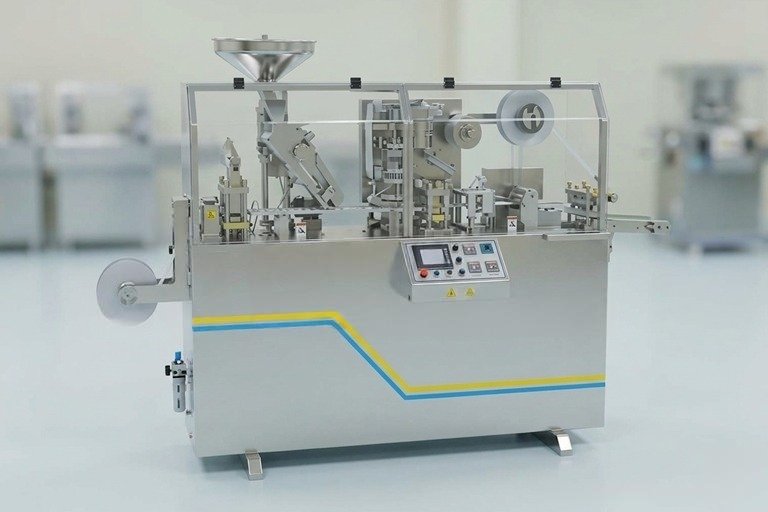
Tablet Production Line (Tablet processing line) including tablet manufacturing line consist of Sieving, Blending, Milling, Drying, Granules Forming, Lubrication, Tablet Compression and Tablet Blister Packaging Machines. We offer tablet compression lines for wet granulation as well as dry granulation. All machines complies as cGMP standard manufacturing requirements. Adinath range offers Small Production Tablet Line as well as High-Speed Tablet Production Line.
Tablets are manufactured by compressing powdered, crystalline, or granular active pharmaceutical ingredients (APIs), either alone or combined with essential excipients such as binders, disintegrants, sustained-release polymers, lubricants, diluents, flavors, and colorants.
The tablet manufacturing process generally falls into three primary methods: wet granulation, dry granulation, and direct compression. Choosing the right technique depends on the specific characteristics and requirements of the product being manufactured, including API properties, stability, and desired release profile.
Each method offers unique advantages for pharmaceutical tablet production, making process selection a critical step in ensuring product quality, consistency, and efficacy. Understanding these tablet manufacturing techniques helps pharmaceutical companies optimize production efficiency while meeting regulatory standards and patient needs.
The most popular technique for preparing tablets is this one. This approach uses “adhesion” to bind the powders to a suitable binder. Before adding the binder to the blended powders, it is diluted with a suitable solvent to create wet granules. These granules are then dried appropriately to remove the solvent, creating dried granules. The initial generation of granules is mainly caused by surface tension forces and capillary pressure. The primary benefit is that, despite being multistage and time-consuming, it satisfies all requirements for tablet formation.
Dry granulation process is uses to form granules without using a liquid solution. This type of process is recommended for products, which are sensitive to moister and heat. Forming granules without moisture requires compacting and densifying the powders. Dry granulation can be done on a tablet press using slugging tooling. On large-scale roller compactor commonly referred to as a powder compacting. The compacted mass is called slugs, and the process is known as slugging. The slugs are then screened or milled to produce a granular form of tablet materials, which have the good flow properties then original powder mixture. The main advantage of dry granulation is it requires less equipment and eliminates the addition of moisture and the application of heat, as found in wet massing and drying steps of the wet granulation method. The manufacture of oral solid dosage forms such as tablets is complex multi-stage process under which the starting materials change their physical characteristics a number of times before the final dosage form is produced. Traditionally, tablets have been made by granulation, a process that imparts two primary requisites to formulate: compactibility and fluidity. Both wet granulation and dry granulation (slugging and roll compaction) are used. Regardless of weather tablets are made by direct compression or granulation, the first step, milling and mixing, is the same; subsequent step differ. Numerous unit processes are involved in making tablets, including particle size reduction and sizing, blending, granulation, drying, compaction, and (frequently) coating. Various factors associated with these processes can seriously affect content uniformity,bioavailability, or stability.
The tablets are made by directly compressing the powdered materials without modifying the physical nature of the materials itself. Direct compression is generally done for the crystalline materials having good physical properties such as flow property, compressibility. Main advantages of direct compression is time saving, safety of operations and low cost.
Tablet Production Line generally consist below mentioned functions and equipment’s. We are giving here below step-by-step tablet processing flow chart with machine details:
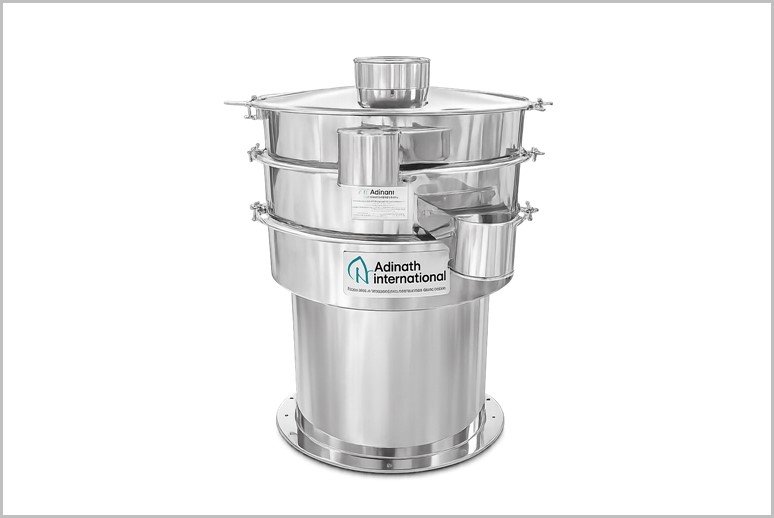
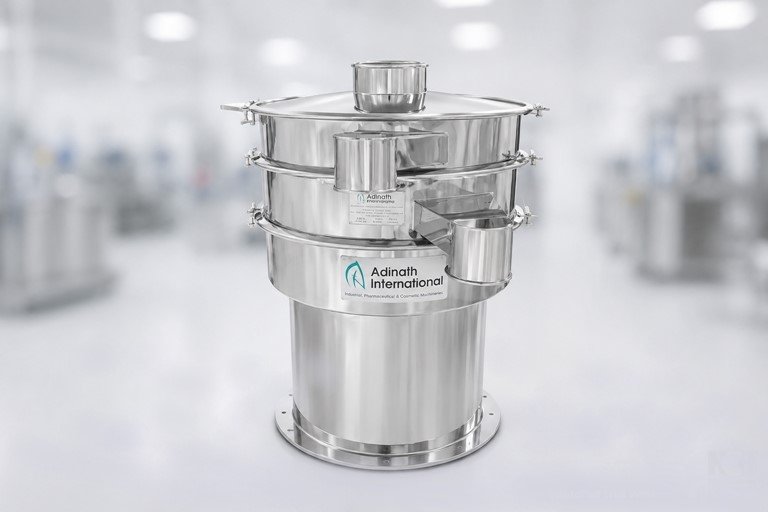
Vibro Sifter (vibrating sieve) unit consisting of circular pre-tensioned screen mounted on the frame along with vibrating motor. The vibrating motor imparts three plane vibrations to the screen due to revolving eccentric weights. Total assembly is mounted on suitable springs so that it becomes a independent body which vibrates without parting any vibrations to the foundations.
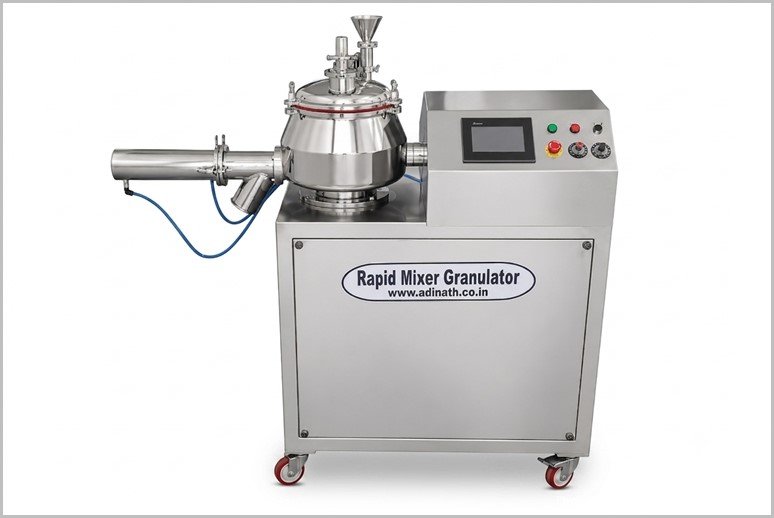
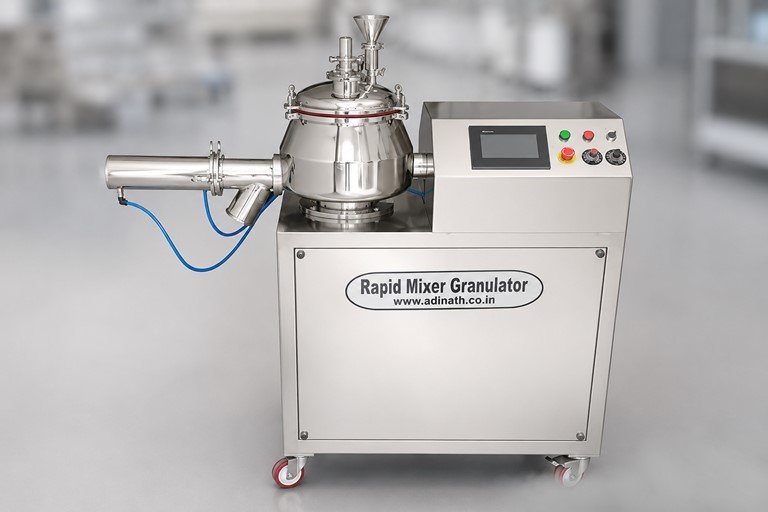
Rapid Mixer Granulator is designed to achieve in reducing processing time, more homogenous mixing consistent granules at lower operating cost and above all maintaining improved hygienic compliant to cGMP norm. Rapid Mixer Granulator working principles are based on two decisive factors essential for the intimate mixing system. 1. Spinning close to bottom of mixing bowl and 2. The impeller sets the entire mixture in whirling rising.
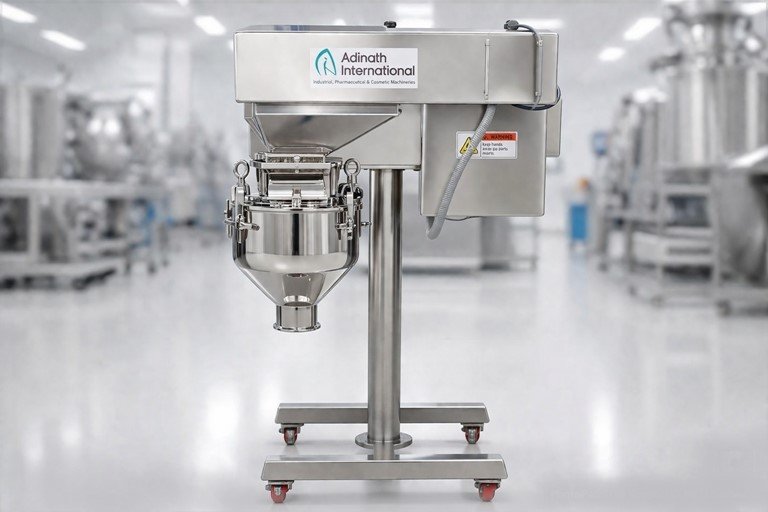
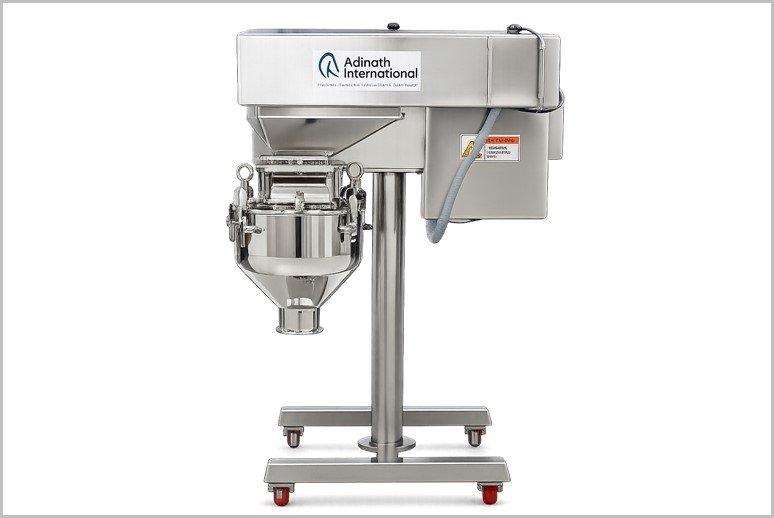
Multi Mill is a self-contained portable unit useful for high-speed granulating, pulverizing, mixing, shredding and chopping of wide range of wet and dry materials without special attachments. As compared to the four common principles of size reduction i.e., grinding, compression, impact and shearing, which often do not produce controlled size reduction, this machine utilizes the principle of variable force swing hammer blades having both knife and impact edges rotating with a carefully selected screen to control size reduction. Flow path of material in vertical rotor machine is streamlined. During comminution, material entering the chamber travels to the periphery and passes through the screen tangentially and radially, avoiding chocking and temperature rise.
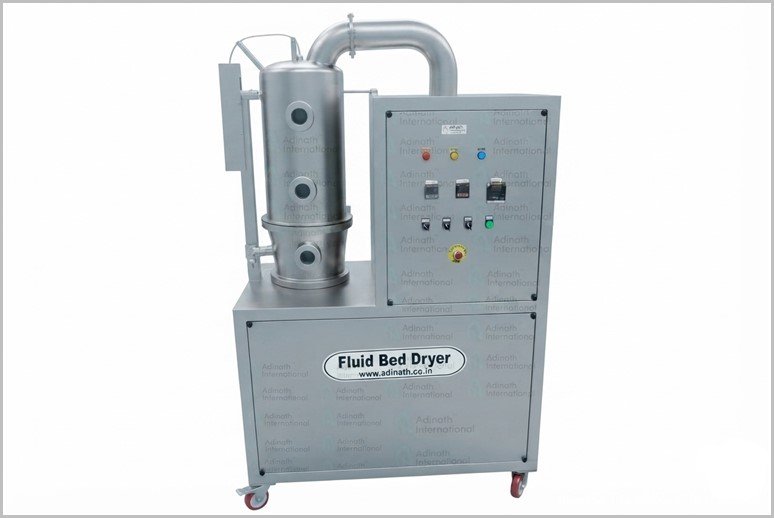
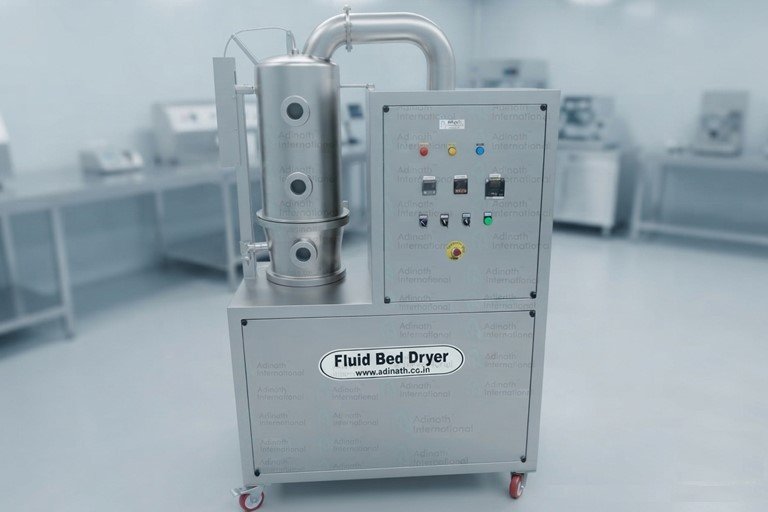
Fluid Bed Dryers are designed to Uniform drying of the material at low temperature. Fluid Bed Dryers are made of Stainless Steel 304/316 with GMP standards. The complete unit is supplied with Suitable motor, blower, filters, filter bag, control panel. Heating system provided as per specific customer requirements.
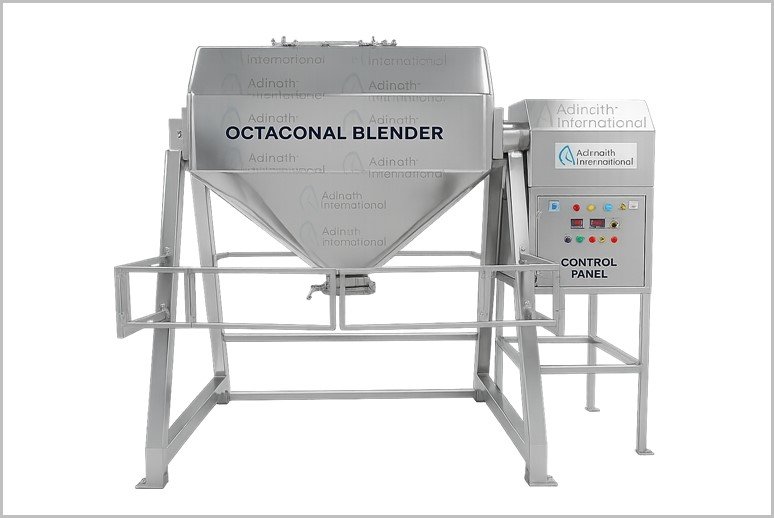
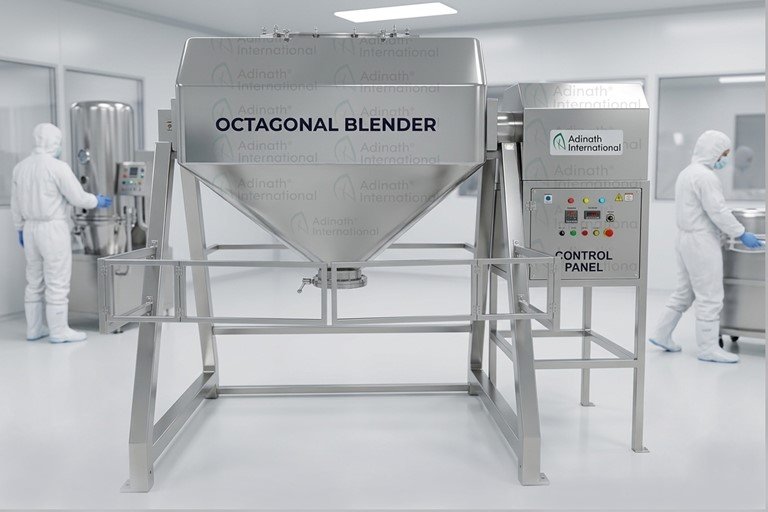
Octagonal Blender (octagonal mixer) including octagonal shape machine is suitable for the mixing granular products. The machine offers great flexibility of operations as well as easy cleaning and maintenance. Simple structure with GMP-compliant design further enhances the functionality of the machine. The Octagonal Blender is an efficient and versatile blending machine for mixing and lubrication process of dry granules homogeneously. Two third of the volume of the Cone Blender is filled to ensure proper mixing.
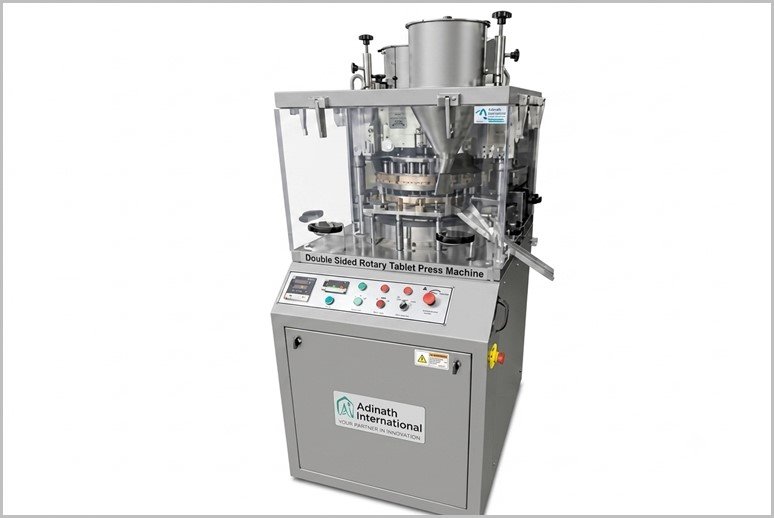
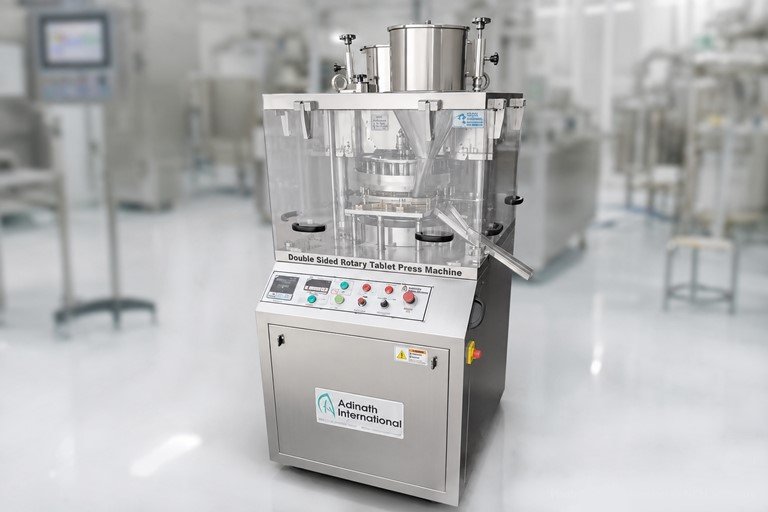
Our range of Tablet Compression Machine includes single and double rotary tablet press machine with hygienic features. Our Square GMP Model is also called as single and double rotary tablet press machine and is commonly uses for slugging big tablets. We specialize in designing 8 station rotary tableting machine, 10 station rotary tableting machine, 12 station rotary tableting machine, 16 station rotary tableting machine, 27 station rotary tableting machine and 35 station rotary tableting machines according to the requirement of pharmaceutical and chemical industries.
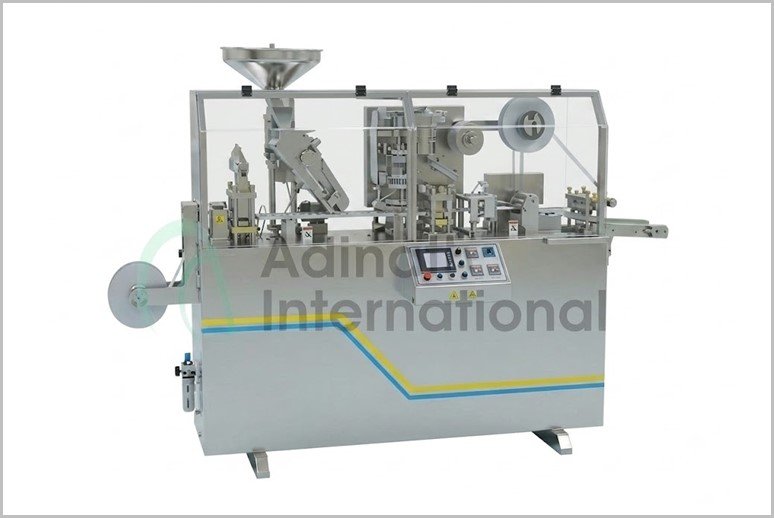
Automatic Blister Packaging Machine designed for efficient packaging of tablets and capsules into high-quality blister packs. Engineered for reliability, performance, and precision, our machines deliver cost-effective blister packaging solutions tailored to pharmaceutical industry needs. Ideal for manufacturers of all sizes, our world-class blister packing machines ensure consistent quality, faster output, and reduced downtime. Trusted by pharma companies worldwide, we offer durable, user-friendly automatic blister packaging machines built to enhance productivity while meeting strict industry standards for safety, accuracy, and long-term operational efficiency.
A Tablet Production Line (also called a tablet processing or manufacturing line) is an integrated system that includes sieving, blending, milling, drying, granules forming, lubrication, tablet compression, and blister packaging machines. Adinath offers complete lines for both wet granulation and dry granulation processes, available in small production and high-speed configurations. All equipment complies with cGMP standards.
Tablets are typically manufactured using one of three primary methods: wet granulation, dry granulation, or direct compression. The choice depends on the properties of the active pharmaceutical ingredient (API), stability requirements, and the desired release profile of the final product. Each method offers specific advantages for quality, consistency, and efficiency.
Key machines include the Vibro Sifter (for grading and sieving), Rapid Mixer Granulator (for mixing and granulation), Multi Mill (for size reduction and milling), Fluid Bed Dryer (for drying), Octagonal Blender (for lubrication and blending), Tablet Compression Machine (for forming tablets), and Blister Packaging Machine (for final packaging). Supporting equipment may also include paste kettles, de-dusters, and dust extractors.
In wet granulation (the most common method), powders are mixed with a binder solution to form wet granules through adhesion, surface tension, and capillary forces. The wet mass is then milled, dried (typically in a Fluid Bed Dryer or tray dryer), screened, lubricated, and compressed into tablets. Although multi-stage, it effectively meets tablet formation requirements.
Dry granulation forms granules without liquids by compacting powders (via slugging or roller compaction), making it ideal for moisture- or heat-sensitive products. It uses less equipment and avoids drying steps. Direct compression involves compressing crystalline materials with good flow and compressibility properties without prior granulation, offering benefits of time savings, operational safety, and lower cost.
The process generally follows these steps: (1) Raw material powder intake, (2) Grading & sieving (Vibro Sifter), (3) Dry/wet mixing with binder (Rapid Mixer Granulator or Mass Mixer), (4) Lumps milling (Multi Mill), (5) Drying (Fluid Bed Dryer), (6) Granule formation, (7) Re-sieving, (8) Lubrication (Octagonal Blender), (9) Tablet compression, (10) De-dusting, (11) Dust extraction, (12) Optional coating, and (13) Inspection and blister packaging.
Yes — Adinath International Tablet Production Line complies to cGMP, MHRA, FDA and WHO-GMP standards, with optional CE marked equipments and 21 CFR Part 11 software compliance for the HMI/PLC. Machine contact parts having Stainless Steel 316L grade materials with validation documents having IQ, OQ, DQ validation protocols as optional. Organization is ISO 9001:2015 certified.
Manufacturing lead time is generally 7 to 14 weeks from order confirmation. Further it takes 2 to 8 weeks for international shipping depending upon destination. Order can be expediate sooner or later as per specific buying requirements. Destination specific certifications like US FDA, EU, ANVISA, SFDA. CE can add 3 to 6 weeks additionally.
Yes, Adinath International Tablet Production Line export this machine to more than 48 countries of this world including America, Europe, Asia, Middle East, Africa, CIS and Australia sub continents. Please visit our clientele page for complete list of our customers worldwide. See the turnkey project page for our complete plant offerings.
Service of skilled engineers and technicians provided for technical support of supplied equipments. Installations, commissioning, training and IQ, OQ, DQ validations performed by qualified engineers. Remote support through video call, phone, email and other modes provided for international installations. Spare parts of Tablet Production Line stocked at our premises in Ahmedabad and shipped immediately after ordering. Standard 12 months manufacturing warranty included with supplied equipment.
Select your country for local regulatory, power supply and shipping details.
Europe
Asia-Pacific
Africa
North & Central America
Middle East
Talk to Our Engineers
Connect with our engineering team to discuss your specific production requirements. We provide customized, cGMP-compliant machinery solutions designed to optimize your manufacturing facility and maximize output.
Established in 1998, Adinath International is a leading pharmaceutical machinery manufacturer in India. We deliver cGMP and FDA-compliant processing, filling, and packaging solutions globally. From liquid filling to tablet presses, our sturdy, cost-effective, and hygienic machines serve the pharma, biotech, food, and cosmetic industries worldwide.
©2026 Adinath International | Theme Developed By Pharma Machinery Manufacturer | Website updated on: 06 November 2026
Get a Quote
Share the product, output and packaging you need. Our engineering team will review it and come back to you with a tailored proposal.
Fill in your details and we will get in touch shortly.