
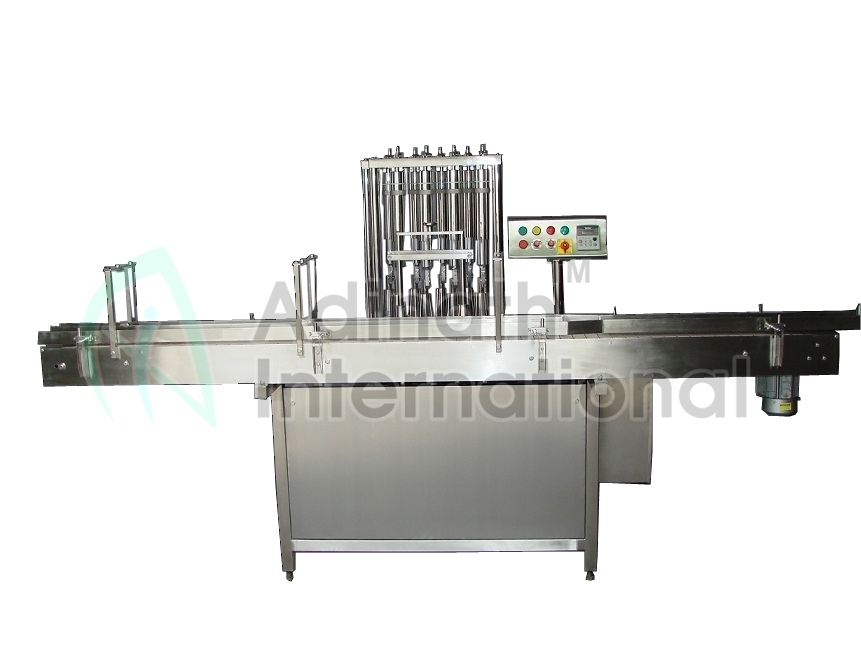
Bottle Liquid Filling Machine in Manual, Semi Automatic & Automatic Modes Machines that fills bottles with liquids is known as a liquid bottle filling machine. A three-phase control panel for the machine’s electrical and system components is present. It is simple to use because to its intuitive digital display and color-coded buttons. Empty bottles are moved on its conveyor system so they can be capped and filled. The conveyor has stainless steel railings to keep the bottles moving straight toward the nozzle and is powered by a three-phase motor. Before the pouring begins, automated sensors make sure that the bottles are present.
Automatic Liquid bottle Filling Machine
When selecting an automatic liquid bottle filling machine, there are a number of things to take into account. You must first determine how many bottles you must fill during each production shift. The best option for your company is a single machine, an intermediate full-line automatic system, or neither. Remember that compared to manual fillers, automatic filling equipment requires less manual labor and floor space. Volumetric fillers and liquid-level fillers are the two primary categories of fillers. The kind of filler you buy will depend on the bottle type and manufacturing pace.

How frequently you plan to use your equipment is another crucial aspect to take into account. Up to five bottles can typically be filled automatically every minute. The expense must be taken into account even though this is a significant gain. To ensure accuracy, you’ll typically need to buy a liquid level filler. Although these fillers are less expensive, not all liquids can be used with them. This device should not be used to fill liquids with a high viscosity, froth, or corrosiveness.
High-speed applications are a great fit for fully automated systems. These machines have electro/pneumatic PLC controllers and servo star systems. Almost any liquid, including viscous liquids with particles, can be handled by them. Five- and ten-liter bottles are available, and several machines can process up to 7200 bottles per hour. The pharmaceutical industry’s future is in these machines. Also a good time to purchase one.
High-speed applications are a great fit for fully automated systems. These machines have electro/pneumatic PLC controllers and servo star systems. Almost any liquid, including viscous liquids with particles, can be handled by them. Five- and ten-liter bottles are available, and several machines can process up to 7200 bottles per hour. The pharmaceutical industry’s future is in these machines. Also a good time to purchase one.
Make sure to select an automatic liquid bottle filling machine with a touchscreen menu if you plan to invest in one. By doing so, you can keep an eye on your output and make adjustments without having to halt it. Numerous filling devices feature time settings that can be altered to suit your unique requirements. Additionally, a lot of them include vision systems that can identify bottle jams and avoid bottle back-ups.
Automatic liquid bottle fillers are frequently designed with a variety of options for different products and bottles. For businesses that sell a variety of goods, gravity pressure fillers are the most popular option. Stainless steel or anodized aluminum is used in the construction of these devices to ensure their dependability and durability. Another choice is a filler that uses pistons. A pump is used by a piston-based device to inject a liquid into the bottle. The fill level is determined by its weight.
Semi Automatic Liquid Bottle Filler Machine
A semi-automatic liquid bottle filling machine system has various benefits. Having a concentrated position and the ability to fill small bottles, this machine enables multiple operators to operate at once. Additionally, there are not many elements that require manual cleaning, making it simple to maintain. The pharmaceutical industry’s future lies with the machines. These devices not only increase productivity and lower labor expenses, but also guarantee accuracy and safety.
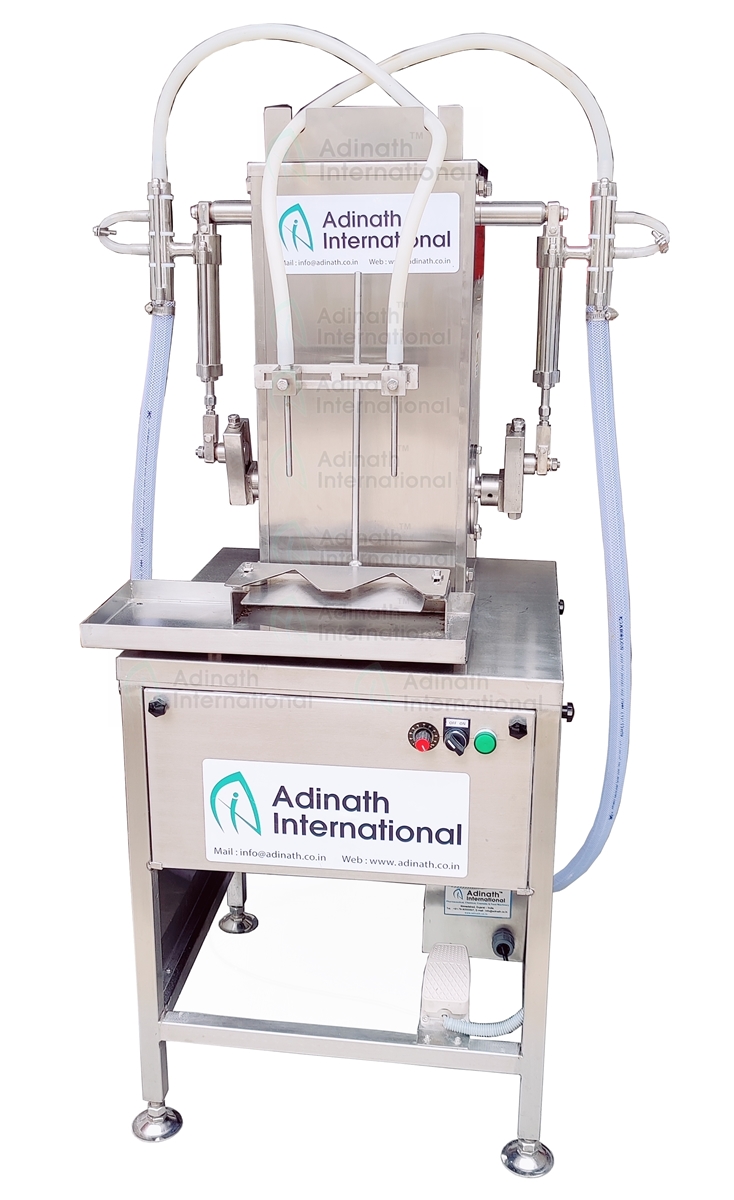
High-quality materials were used to construct the machines, which also have built-in turn tables for the in-feed and out-feed. They have independent drives for every vial, and the machine’s overall speed is coordinated with the speed of each vial. There are numerous sizes and types on the market; you can select the one that best suits your company. Contact us right away for additional details!
The kind of liquid to be filled is one of the most crucial things to take into account when selecting a semi-automatic liquid bottle filling machine. You should look for a machine that can handle the liquid’s corrosive or viscosity properties if it has either of these. Water, olive oil, detergent, and fuel are just a few of the liquids that this machine can fill. They can work with a wide range of bottle shapes and materials and can fill a large variety of bottles.
The capacity to fill vials and bottles is another quality to look for in a semi-automatic liquid bottle filling machine. The hopper can be optional, and the machine can handle a variety of liquid kinds. Advanced anti-leaking technology is installed in the filling head to stop any leaks. These devices can fill pastes in addition to liquids. You can pick the ideal semi-automatic liquid bottle filling device to suit your demands.
A semi-automatic liquid filling machine is the greatest place to start if you’re looking for a high-quality, high-performance device. These devices are incredibly robust, need little upkeep, and can be customized to match the specific needs of your company. Pneumatic base and volumetric are the two primary categories of semi-automatic liquid filling equipment. These devices are available for both flat and round bottles and can fill any kind of free-flowing liquid.
Manual Liquid bottle Filling Machine
Machines for manually filling liquid bottles are portable and easy to use. The stainless steel housing is hygienic. The volume and rate of filling can be changed at will. This particular machine complies with the requirements of the food and pharmaceutical industries. Up to 10 kilos can fit in the hopper. Machines used to manually fill liquid bottles have a tough rotating valve system. Film packing is required for precision items to stop leaks. A rotary valve is included in the bottle filling machine for accurate liquid discharge.
It is possible to set up a manual liquid bottle filling machine for semi-automatic or in-line operation. It can be modified for quick filling. You can select a filling machine that meets your demands whether you want to fill wine, soda, sparkling water, or water. These devices are simple to use and can expedite the procedure. Before purchasing a manual machine, keep the following in mind:
A manual liquid bottle filler is not powered by electricity. They are appropriate for small-scale industries and laboratories. They work best with bottles up to 600 ml. between fifteen and nine hundred bottles can be produced every hour. A manual machine can handle a wide range of goods. It can fill items that are medium-viscous and freely flow. Additionally, manual machines come in a range of styles and costs. The features of manual liquid bottle filling equipment are created to fulfil particular requirements. The return gas and filling liquid are now separated by a new filling valve. Additionally, it incorporates a magnetic clutch for the lid screw. Additionally, the torsion torque can be altered to guarantee secure screwing. Once the bottle has been filled with liquid, it is time to seal it and get it ready for sale. You can pick the model that best fits your needs and price range.
Small and medium businesses can use these equipment. They can precisely fill bottles of liquid and are portable and simple to operate. For longevity, the machine’s parts are composed of PTFE or stainless steel. It is appropriate for low-dose filling and secure for usage in humid conditions. A programmable controller is also a component of these machines. They can be switched manually or automatically.
Pump/ Liquid Bottle Filling Machine
Different kinds of bottles can be filled using a pump for a machine that fills liquid bottles. Although they can be used with a range of different fillers as well, pump fillers are typically utilized with liquid fillers. The filling principle must be established prior to the start of manufacture. A packing expert can respond to your inquiries about various fillers. These include piston fillers and gravity-fed fillers. The advantages of each kind of filler are listed below.
Machines that fill liquids peristaltically measure the liquids as they do so. Pump filling machines can measure liquids in two different ways: time-based filling and pulse-based filling. With time-based filling, the pump can run for a predetermined period of time. Operators can establish accurate times with the aid of straightforward timers, and accuracy can be increased by adjusting a pump. The movement of a pump component is measured by pulse-based filling equipment to guarantee the right amount of liquid.
A exact amount of liquid is dispensed into the bottle via precision fillers. Pharmaceuticals require this because container form differences can alter the liquid volume. Special calibration, timing, and balance instruments are needed for precision fillers. However, the accuracy of their dosages and the amount of waste they reduce make them worth the extra cost. It is far simpler to purchase a machine with room for expansion than to upgrade later. So how do you pick a pump for a system that fills liquid bottles?
Finding a machine that is perfectly suited to your demands is crucial because a liquid bottle filling machine is an expensive investment. A company ought to spend some time learning about the demands of its target market and the sector it caters to. This enables the machine to be modified to meet the demands of the user. In this manner, an effective, dependable, and reasonably priced equipment will be the end product.
A high-end entry-level filling equipment is the Single Head Positive Displacement Pump Filling Machine. It is simple to use and a great option for filling products that are thin or have a high viscosity. These devices are made to fill various items, including nail paint.